First I would like to thank the troops and veterans for their selfless efforts and sacrifices. Without them there would be no Independence Day.
Here's the story behind the Star Spangled Banner and how it became the National Anthem:
In 1814, about a week after the city of Washington had been badly burned, British troops moved up to the primary port at Baltimore Harbor in Maryland. Francis Scott Key visited the British fleet in the Harbor on September 13th to secure the release of Dr. William Beanes who had been captured during the Washington raid. The two were detained on the ship so as not to warn the Americans while the Royal Navy attempted to bombard Fort McHenry. At dawn on the 14th, Key noted that the huge American flag, which now hangs in the Smithsonian's American History Museum, was still waving and had not been removed in defeat. The sight inspired him to write a poem titled Defense of Fort McHenry. The poem was eventually set to music that had originally been written by English composer John Stafford Smith for a song titled "The Anacreontic Song". The end result was the inspiring song now considered the national anthem of the United States of America. It was accepted as such by public demand for the next century or so, but became even more accepted as the national anthem during the World Series of Baseball in 1917 when it was sung in honor of the brave armed forces fighting in the Great War. The World Series performance moved everyone in attendance, and after that it was repeated for every game. Finally, on March 3, 1931, the American Congress proclaimed it as the national anthem, 116 years after it was first written."
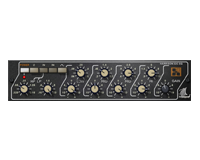
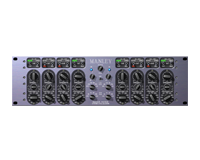
The Inward Connections Magnum VU Mic Pre is the same as the original Magnum Mic Pre except for the addition of a VU meter and the omission of the the 100 and 200hz HPF. So you get the same great tone, warmth and tons of gain. The Magnum sounds great on many sounds including those with high transients such as drums and also vocals.
Here's a pic of the original Magnum Mic Pre for comparison:
From the website:
"With a warm and upfront low-end, punchy mid-range and open top end, the Inward Connections Magnum VU Mic Pre will bring new life to your recording rig. Classic sounding warmth, but with airiness and headroom for days. Magnum offers something different than the old standbys.
Extra large tone for your lunchbox!"
Features:
Circuitry features two VF600 all discrete amp blocks
LED VU meter that monitors the output level
+48VDC phantom power switch
Phase reverse switch
-20dB pad switch
Hi-Z low level line input 1/4" phone jack for guitars, keyboards and low level instruments
12-position rotary trim (5dB per step), 25dB to 80dB selectable range
70hz hi-pass filter
Output level rotary control
Balanced input and output transformers
Fits standard 500 series slot configuration, mechanically and electrically
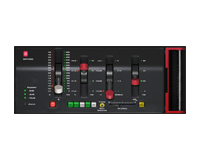
I'm a big fan of Empirical Labs and use their products every chance I get. They recently announced a new 500 series channelstrip module appropriately called the DocDerr. It's available in both vertical and horizontal styles. The circuitry is identical in both only the front panels are different. I want two of these.
From their press release:
Empirical Labs is pleased to announce the DocDerr, a brand new API 500 series multi-purpose channel strip. This breakthrough tone enhancement module houses six different sections of digitally controlled analog processing at an extremely affordable price point ($799 MSRP).
A super low-noise preamp capable of line or 16 dB of “instrument” gain is followed by four sections of EQ offering one selectable high pass and three parametric bands. The dynamics section provides renowned Empirical Labs compression at an unprecedented price, as well as a tape emulation circuit to soften high frequencies and clips. A “Mix” knob allows the user to blend the uncompressed EQ’s signal with the compressed and saturated signal. Inputs and outputs are DC coupled, and the output can be switched between single ended or differential, yielding + 6dB of gain. A “Bad!” hard clip indicator monitors most every section for internal clipping.
“I couldn’t be more delighted with this piece,” says ELI founder and designer Dave Derr. “It has an interface and feature set unlike anything else on the market.”
The DocDerr model EL-Rx will be available with either horizontal or vertically oriented front panel configurations, and begins shipping July 2011.
Empirical Labs Inc. (ELI) is a New Jersey-based company that designs and produces professional audio equipment and software for creative professionals. ELI products are made with one simple philosophy that drives the company and continues their success: “We want to make products that work a little easier, a little better, and a lot longer - and make sure they are fun to use."
Here's an excerpt from the DocDerr manual which explains the dynamics section in more detail:
"The INPUT KNOB is the compressor’s main control (not counting the MIX control), which affects how much compression, is put on a source. The INPUT Knob follows the EQ, and drives signal into the compressor, scrunching the dynamics and peaks into an increasingly narrow range. The time constants and the curve of the compressor were selected to be as aggressive as possible without crackly unmusical distortion. The ratio is about 5:1. With an attack under 1mS, it could be considered a limiter. Above about 8 – 10dB of compression there will be saturation caused by fast time constants working on each peak of the waveform. We think it sounds very “tubey”, with nice harmonics added at high gain reduction… but, it IS a form of distortion, and it will get more prevalent with more gain reduction. Many of the classic old compressors from the 60’s and 70’s were valued for this fat distortion. One can tame any saturation by turning down the input knob, thereby turning down the compression, OR, by adjusting the MIX control to include more of the uncompressed (dry) signal in the output. When using the MIX control, the user may find they can put on tons of compression (up to 20dB), and still get a very natural sounding instrument or voice. By judiciously mixing the compressed signal under the dry signal, the sustain and note detail will come out without feeling squashed. Modern mixdown engineers use this “blend” technique all the time, but have to split the signal going to a compressor and then return it to submix the dry and compressed signal on their mixing console. For the first time, the common live instrumentalist can use this advanced compression technique just by turning a knob."
The DocDerr will be available soon. You can pre-order it from various dealers including Alto Music
Here's an article onNPR.org that gives you a breakdown on what it takes to make a "hit song". Rihanna's "Man Down" is used as a real world example and it shows the actual cost of making the record (writers, producers, engineers, studio etc.) runs in the high 5 figures but pales in comparison to the promotion and marketing costs that can easily exceed 7 figures.
Here's the article in it's entirety:
"Getting a song on the pop charts takes big money.
Def Jam started paying for Rihanna's recent single, "Man Down," more than a year ago. In March of 2010, the label held a writing camp in L.A. to create the songs for Rihanna's album, Loud.
At a writing camp, a record label hires the best music writers in the country and drops them into the nicest recording studios in town for about two weeks. It's a temporary version of the old music-industry hit factories, where writers and producers cranked out pop songs.
"It's like an all-star game," says Ray Daniels, who was at the writing camp for Rihanna.
Daniels manages a songwriting team of two brothers, Timothy and Theron Thomas, who work under the name Rock City. "You got all the best people, you're gonna make the best records," he says.
Here's who shows up at a writing camp: songwriters with no music, and producers toting music tracks with no words.
The Thomas brothers knew producer Shama "Sham" Joseph, but they had never heard his Caribbean-flavored track that became "Man Down."
According to Daniels, the brothers listened to the track and said, "Let's give Rihanna a one-drop! Like, a response to 'I shot the sheriff!"
They wrote the lyrics to "Man Down" in about 12 minutes, Daniels says.
To get that twelve minutes of inspiration from a top songwriting team is expensive — even before you take into account the fee for the songwriters.
At a typical writing camp, the label might rent out 10 studios, at a total cost of about $25,000 a day, Daniels says.
The writing camp for Rihanna's album "had to cost at least 200 grand," Daniels says. "It was at least forty guys out there. I was shocked at how much money they were spending! But, guess what? They got the whole album out of that one camp."
A writing camp is like a reality show, where top chefs who have never met are forced to cook together. At the end, Rihanna shows up like the celebrity judge and picks her favorites.
Her new album has 11 songs on it. So figure that the writing camp cost about $18,000 per song.
The songwriter and the producer each got a fee for their services. Rock City got $15,000 for Man Down, and the producer got around $20,000, according to Daniels.
That's about $53,000.00 spent on the song so far-- before Rihanna even steps into the studio with her vocal producer.
The vocal producer's job is to make sure Rihanna sings the song right.
Makeba Riddick didn't produce Rihanna's vocals on "Man Down," but she's one of the industry's top producers, and has worked with the singer on many songs, including the two number one hits in 2010: "Rude Boy" and "Love the Way You Lie."
When Riddick works with a singer, she'll say, "I need you to belt this out, I need you to scream this, as if you're on one end of the block and you're trying to talk to somebody three blocks away."
Or maybe: "Sing with your lips a little more closed, a little more pursed together, so we can get that low, melancholy sound."
Not only that, the vocal producer has to deal with the artist's rider. The rider is whatever the artist needs to get them in the mood to get into the booth and sing.
"They'll have strobe lights, incense burning, doves flying around the studio," she says. (Yes, Riddick has had doves circling her head while she's working.)
Rihanna is "very focused" Riddick says. So no doves.
Riddick's fee starts at $10,000 to $15,000 per song, she says.
The last step is mixing and mastering the song, which costs another $10,000 to $15,000, according to Daniels.
So, our rough tally to create one pop song comes to:
The cost of the writing camp, plus fees for the songwriter, producer, vocal producer and the mix comes to $78,000.
But it's not a hit until everybody hears it. How much does that cost?
About $1 million, according to Daniels, Riddick and other industry insiders.
"The reason it costs so much," Daniels says, "is because I need everything to click at once. You want them to turn on the radio and hear Rihanna, turn on BET and see Rihanna, walk down the street and see a poster of Rihanna, look on Billboard, the iTunes chart, I want you to see Rihanna first. All of that costs."
That's what a hit song is: It's everywhere you look. To get it there, the label pays.
Every song is different. Some songs have a momentum all their own, some songs just break out out of the blue. But the record industry depends on hits for sales. Having hits is the business plan. The majority of songs that are hits — that chart high, that sell big, that blast out of cars in the summertime-- cost a million bucks to get them heard and played and bought.
Daniels breaks down the expenses roughly into thirds: a third for marketing, a third to fly the artist everywhere, and a third for radio.
"Marketing and radio are totally different," he says. "Marketing is street teams, commercials and ads."
Radio is?
"Radio you're talking about . . ." he pauses. "Treating the radio guys nice."
'Treating the radio guys nice' is a very fuzzy cost. It can mean taking the program directors of major market stations to nice dinners. It can mean flying your artist in to do a free show at a station in order to generate more spots on a radio playlist.
Former program director Paul Porter, who co-founded the media watchdog group Industry Ears, says it's not that record labels pay outright for a song. They pay to establish relationships so that when they are pushing a record, they will come first.
Porter says shortly after he started working as a programmer for BET about 10 years ago, he received $40,000.00 in hundred-dollar bills in a Fed-Ex envelope.
Current program directors told me this isn't happening anymore. They say their playlists are made through market research on what their listeners want to hear.
In any case, to return to our approximate tally: After $78,000 to make the song, and another $1 million to roll it out, Rihanna's "Man Down" gets added to radio playlists across the country, gets a banner ad on iTunes ... and may still not be a hit.
As it happens, "Man Down" has not sold that well, and radio play has been minimal.
But Def Jam makes up the shortfall by releasing other singles. And only then-- if the label recoups what it spent on the album — will Rihanna herself get paid. [Copyright 2011 National Public Radio]"
The Custom Shop in AmpliTube 3 brings an entirely new shopping experience for software plug-ins. Build your own collection of amp and effects models with a level of customization never before seen and at prices so affordable!
Start by downloading a FREE upgrade to a fully functional version of AmpliTube 3.
Then you can try and buy à la carte stomp boxes, amplifiers, cabinets, microphones and rack effects from a vast collection of over 200 gear models including officially approved models of gear from world-class brands such asFenderTM,Ampeg®, Orange®, SoldanoTM, Seymour Duncan®, T-RexTM and many more.
Newly added gear in the AmpliTube Custom Shop:
Seymour Duncan Power Grid stomp box
The Power Grid has five stages and three-band active EQ, which makes it one of the most versatile distortion pedals available.
Seymour Duncan Shape Shifter stomp box
The Shape Shifter reproduces the hypnotic tremolo sounds characteristic of 50's tube amps with detailed "Wave" and "Shape" controls allowing you to create many different sounds!
Orange Thunderverb 200 amp
The Thunderverb 200 amp is a powerful and flexible amp capable of all kinds of tones from vintage rock to modern blues, hard rock to metal. Nothing can match the bone crushing, bottom-end punch of this big stage tone head.
Orange Tiny Terror Combo and Orange PPC212OB cabs
Along with the Thunderverb 200, IK has also introduced two new Orange cabinets!
Instantly unsubscribe or contact us for all other requests. Please do not respond to this email as it may result in an error. AmpliTube® is a registered trademark property of IK Multimedia Production. All other product names and images, trademarks and artists names are the property of their respective owners, which are in no way associated or affiliated with IK Multimedia. SEYMOUR DUNCAN® is a registered trademark of Carter Duncan Corporation. ORANGE® is a registered trademark property of Orange Music Electronic Company Ltd.
IK Multimedia US Office | 1153 Sawgrass Corporate Pkwy. | Sunrise, FL 33323 USA
IK Multimedia Headquarters | Via dell'Industria, 46 | 41122 Modena ITALY
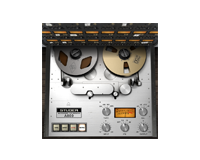
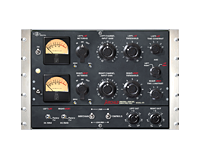
The Award-Winning Abbey Road Studios Plugins - 50% OFF
For a limited time only, all Abbey Road Studios plugins will have 50% slashed off the price.
TG12413 TDM was $560 now $280 Native was $335 now $165 TG Mastering Pack TDM was $560 now $280 Native was $335 now $165 RS124 TDM was $560 now $280 Native was $335 now $165 The Brilliance Pack TDM was $449 now $250 Native was $249 now $125
"I recently found myself without my Abbey Road plugins and realised I couldn't work without them. The TG12413 Limiter combined with the TG Mastering EQ's is an instant "killer" drum sound. They've become a staple part of my setup." Jake Davies, engineer (U2, Pink, Bjork, Madonna)
"The quality and warmth from the RS124 is so much the same as the original box. The plugin does that gooshy, punchy thing just like the original." David Kahne, producer (Paul McCartney, Tony Bennett, The Strokes)
"Awesome! The Brilliance Pack really enhances the presence without introducing harshness into the sound."Michael Wagener, producer/mixer (Ozzy Osbourne, Metallica, Alice Cooper)
The Preceptor from Generic Audio is a mastering quality " two-channel (stereo/dual mono), pure analog (Class-A, discrete) dynamic processor, in which the gain reduction is made by a transistor in the differential amplifier circuit with Zener diodes stabilization". This is one solid looking unit and it has some impressive features including an external/internal sidechain input with HPF filter and parallel compression with variable blend. There is also a Model T that has an extra switch to select between hard and soft modes. (Note the extra "Action" switch next to the Limit/Compress switch). The Model-T attack is also 0.5 to 31ms while the Model-A is 0.5 to 60ms and the release is 50ms to 2sec. compared to the Model-A's 25ms to 6sec.
Preceptor Model-T
Features:
Massive sound
Hand made and calibrated
Pure analog design
3U rack space
Internal PSU 115V/230V
Special power transformer
Two independent mono blocks
Ultra stable power supply
16 matched Zener diodes in the signal path
Internal and external sidechain
Classic Carnhill transformers
Input Z switchable (2k5Ω or 10kΩ)
Stereo or dual mono operation
Hard relay bypass
Sidechain HPF
Blend function (parallel compression)
Retro panel meters
Only gold contact stepped attenuators and toggle switches (no potentiometers!)
Easy-settings repeatability
Highest functionality!
Specifications:
Inputs: Balanced XLR
Outputs: Balanced XLR
Ext. sidechain inputs: Balanced TRS
Signal transformers: Carnhill
Bypass: hard relay bypass
Input impedance: 2k5Ω or 10kΩ switched on the front panel
The PEQ-1 is a Passive tube eq kit based on the Pultec eq series. From the video you can see and hear how easy it is to dial in the frequencies you need for a variety of sounds.
"Just like the original Pultec, the PEQ-1 offers the following controls: Low Boost , Low Cut, Low Frequency, High Frequency, Bandwidth, Hi Boost, Hi Cut Shelf."
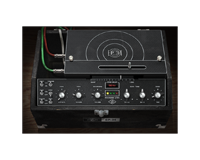
Our Biggest UAD Plug-In Sale This Year — Save Between 10 - 50% Storewide.
If you've been craving that special UAD Plug-In or bundle, you won't want to miss the Half-Yearly Sale in UA's Online Store. Save on over 40 individual UAD plug-ins and bundles storewide.*
Here are just a few examples of the extra-special Half-Yearly savings:
A gorgeous mastering EQ, with a lush, open sound and big, tube tone. One of the best-reviewed EQ plug-ins of all time.
Normally $299 / Now Just $239.49
No coupon codes necessary. Simply cart the UAD Powered Plug-Ins & Bundles you want and save. But hurry, the Half-Yearly Sale ends at 12:00 AM (Pacific Standard Time) on July 1st, 2011. Visit the UA Online Store today. * Due to contractual obligations, please note that the new Lexicon 224 Digital Reverb and the SSL E Series Channel Strip and SSL G Series Bus Compressor plug-in crossgrade offers are not eligible for this promotion. ** Note:The EP-34 Tape Echo product is not affiliated with, sponsored, nor endorsed by any companies currently using the "Echoplex" name.
Phone Support:
USA: 877-MY-UAUDIO
[877-698-2834]
Int'l: +1-831-440-1176
FAX: +1-831-461-1550
Available from 9am - 5pm Monday through Friday, PST
Remember seeing something similiar to this a few years back on the net. There are a couple programs that do spectral audio editing including Prosoniq's Sonicworx Isolate, Melodyne EditorandAdobe Audition".... but Divide Frame's new Spectral Layersapplication looks to take things to an even more Photoshop-style extreme than other tools. While still in the alpha stage and not available to the public just yet (though both Windows and Mac versions are promised), the software does appear to be fairly complete, including the ability to use multiple layers, work with multi-channel audio, and extract individual voices, instruments, or any other noises..."
Alembic is well known for their bass guitars and preamps. One of their products that I think would come in handy while mixing is the the SF-2 Super Filter. I'm eager to try this on bass in combination with a Distressor. Both in series and parallel. Which do you think would sound better?
"The SF-2 Super Filter contains two tunable active filters of exceptional dynamic range. The filters can be configured individually as low-pass, band-pass, and high-pass. In the stereo mode, two channels are provided, each with a two channel mixer for combining the filtered and unfiltered signals. In an alternate mono mode, a three channel mixer combines the two filtered and one unfiltered signal paths, together with an input gain control. An instrument preamplifier with front panel input jack is also available for stand-alone use..."
They also state that "...There is no other preamp, graphic EQ, parametric EQ, or filter unit anywhere from anyone that can shape tone like the Alembic SF-2." If you have used this unit, do you agree?
Unity Audio's "The Rock" is an active 2-way studio monitor that has the unusual feature of having a front baffle made of Corian granite, combined with a folded ribbon tweeter and 6.5" woofer powered by a custom E.A.R. amplifier in a sealed cabinet. The speakers frequency response only deviates an impressive +/- 0.5db from 70hz to 30khz. I need to acquire a pair of these for a more in depth evaluation.
Meanwhile check out the following for more info on "The Rock".
From their website:
"We wanted to produce a brutally honest monitor and we've certainly done that, our measurements indicate this. The cabinet is sealed, it has no port, which is unusual for studio monitors, but the difference in bass accuracy is incredible, it also has very good low-end extension too. From the start we decided not have any EQ controls, the sound is what you get, if you can't deal with the accuracy The Rock produces then it's not for you, simple. We've consulted with many producers and engineers and they welcome such a monitor,..."
Here's an excerpt from a great Sound On Sound review:
"The Rock is a relatively modestly sized speaker, comparable with the likes of the Mackie HR824 or the PMC TB2, and so would sit comfortably on the meter bridge of a big console, or behind (or on) the DAW desk.... "
".... I found these monitors to be a real pleasure to work with. There was no hint of fatigue even after long, intense editing and mixing sessions, and their ability to reveal mid-range detail and low-frequency timing makes it very easy to hear what you’re doing, whether it’s making EQ decisions, adjusting dynamics, balancing instruments or checking edits. Adjusting stereo panning was slightly less precise than it could have been, perhaps, but in practice I didn’t have any problems....."
Key features
2 way active monitor
Bespoke true class A/B 100 watt E.A.R. discrete amplfier
Yesterday I went to one of the top engineering/production schools in the country SAE Miami to do a mix seminar with fellow engineer and head instructor Frank Socorro. The staff and students made me feel right at home.
Their mix room is equipped with an SSL 4000 G+, Protools HD, an Otari MX80 32 track tape machine, various outboard including one of my favorites the TC Electronics M5000. For monitoring the room is equipped with KRK Vxt8's as nearfields and JBL 4435 mains.
Instead of having a formal lecture with a Q&A session at the end, I decided to just let it flow like a real session and allow the students to ask questions and make comments as the mix went along. The students were quite knowledgeable and showed a genuine interest in what was being said.
My favorite way to work is the hybrid method where I use the editing and automation capabilities of the DAW with the summing and easy access to outboard gear of the analog console.
I told them how before starting a mix I always check all the channels on the console and also the outboard gear to make sure they were working properly. Nothing worse than to be in the middle of a mix and discover that the compressor you were saving for the lead vocal is broken. I usually use a PT session that has a signal generator on each track set to 1khz at -18db (or the reference level that particular room's interfaces are calibrated for) to do the hardware testing. I use the PT signal generator because it's much easier than constantly patching and un-patching the tone generator built into the SSL. I check the switches and knobs on every channel of the SSL and make notes of any bad , intermittent or noisy channels I encounter. I also check the main output and control room outputs for any type of noise, hum, buzz, phase issues or level imbalances between the left and right channels of the stereo buss.
Most accurate RTA/level analysis software such as Spectrafoo
or Waves Paz Analyzer
can be used to perform this task. I have one of these on my PT master for every mix.
Whenever working in a room for the first time it's a good idea to play songs that you know very well to get your ears acclimated to the room's acoustics. When you have the mix to a certain point print a pass and listen to it on a another system such as your car if you can. The car is a good reference point because even though the car's system might not be totally accurate we spend a lot of time listening to music while driving and you know what it's supposed to sound like when played in the car. Also try to check the mix on a good pair of headphones at least once or twice. Headphones are a great way to check vocal balances.
Usually when mixing I tend to get a rough balance of the song going first just with levels and panning.
Then each track is soloed to check for noise, dropouts, glitches, headphone leakage etc. This also helps me to analyze each sound's tone and character and make a note of possible processing (compression, eq, efx) I might use for the mix. Once I've resolved any issues with the tracks I listen a few more times to the song and take mental notes on which direction the mix should go based on what I'm hearing and what the artist and producer told me when we discussed the song. Next I solo the lead vocal, main instrument and snare to find the right reverb for each. The reason I do this is the reverbs have to not only work on the individual sounds but together in the mix. I do the same with the sounds to which I might want to add delays.
Next I start with compression and eq'ing the sounds while listening to the whole mix. I rarely solo when applying eq because the sound has to work with the mix as a whole. Sometimes if there's a section in the song where a particular sound is played solo I will use plugin automation to apply different eq or place them on different tracks to process them differently just for the solo. When mixing I try to spend as little time as possible in the edit window of the DAW so as not to have my eyes influence what I'm hearing.
(Mix with your ears not your eyes).
We also spoke about summing boxes such as the Chandler Mini-Rack Mixer
In my experience these work best when used from the beginning of the mix just as if an analog console was being used.
I also mentioned that sometimes I limit myself to using just 3 or 4 different plugins when mixing so I don't waste a lot of time experimenting which in turn leads to a more cohesive mix.
Last but not least, our brains have a way of correcting what we hear over extended periods of time so take frequent breaks while mixing to keep your ears and perspective fresh.